
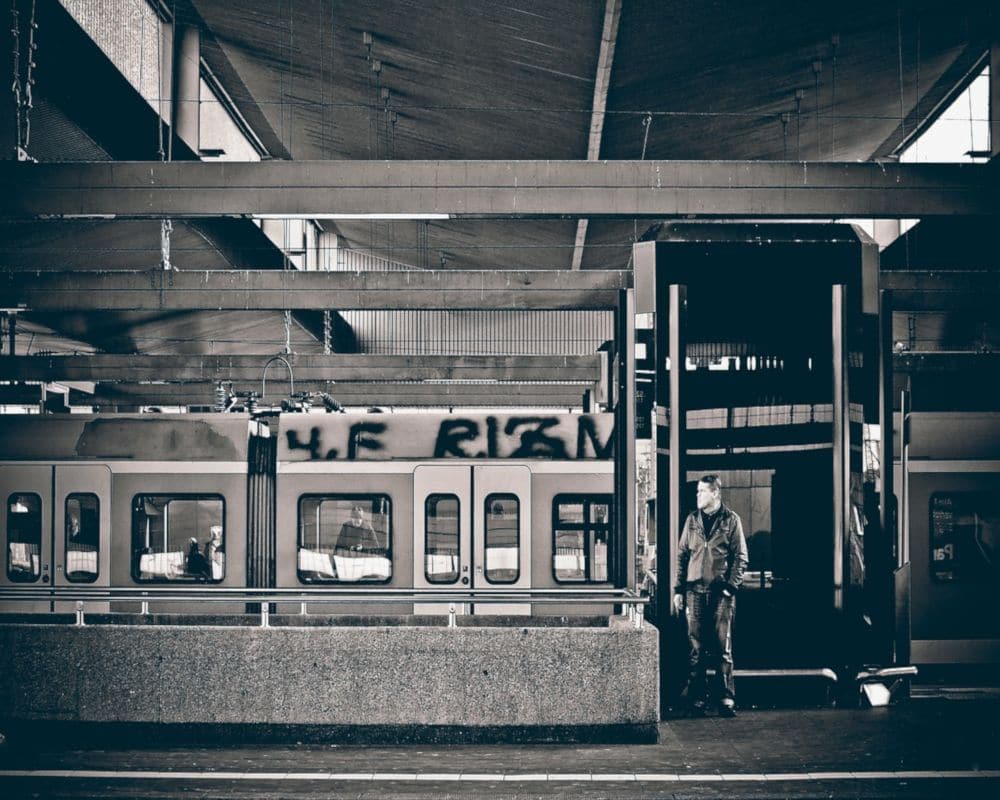
The 21st century years have seen a rise in people’s interest to capture compelling, raw and soul moving photos of life. More people are also booking photo sessions with newbies and experienced photographers to record a moment and express a feeling or idea. The most rampant photography genre of the millennial age is street photography. As deluding as the name might be, most photographers consider the niche not to be limited to taking photos only in the streets. Street photography may include pictures of airports, the park the bus or the subway. The primary factor of street photography is capturing people and the everyday. A photographer may or may not seek permission from a stranger or a property owner to snap a shot. Newbie photographers often have a little hiccup on the first days and appreciate the expert advisory of legends such as Rocco Basile, a fine arts photographers who also counsels rising and forthcoming photographers. There are several key factors that prospective snappers ought to take into consideration to produce excellent images.
Find the decisive moment
Finding the perfect time is a commonly practiced photo taking technique that applies even to amateurs who are snapping a family photo. Henri Cartier defines this nick of time as the most precise moment that can express the desired emotion or aura. While capturing the fast moving world, it is advisable to capture 20 to 30 shots of the same scene. That way, one can have ample choices to pick from in the editing process.
Look for emotions
A good photographer has a fast and keen eye and an equivalent fast hand that will take people’s photos without arousing curiosity from them or bystanders. One can look out for these emotions by observing people’s body language and facial expressions. Capturing emotions such as sadness, anger, happiness, and remorse is bound to create a collection representing the raw and real daily life.
Be creative in capturing scenarios
While people provide a broad canvas for taking inspiring photos, the street has a ton of objects one can use. These include statues, seats in the park, trees alongside the road, buildings, bridges and every imaginable thing in sight. It is crucial to consider the object’s geometry, composition and color, the natural lighting and the camera’s settings to maximize their outlook. Rocco recommends the use of flash lighting during the day when the sun’s rays are bright.
Get detailed
Sometimes the item does not need to be a grand thing, but a simple one such as a discarded soda lying on the ground. Before taking an up-close photo, it is important to ensure that the camera is in focus. Low-quality cameras such as phone cameras can get blurry when near the object in focus. With such a case, stepping back will bring back clarity to the photo. Another idea would be to juxtapose items. For example, taking a picture of a lighter’s fire with the background of water, or a sad person standing in front of billboard with a happy person’s face

 Youth sports programs are often advertised as a means through which kids can be taught about a number of principles they will
  It is a simple fact of the matter that a great deal of the construction currently in place all over the world will need to be replaced or retrofitted in order to meet global carbon emission standards. While the timeline in which these changes will need to occur is not yet absolute, it seems plainly evident that sustainability advisory experts like
  Even though it seems that the world at large has reached an agreement that climate change is a serious threat to citizens of countries across the globe, there are still a number of obstacles that remain in place and will continue to make it difficult to implement meaningful changes on a worldwide scale. In developing countries, for example,